Table of contents
Efficient land clearing requires careful consideration of the equipment best suited for the job. The choice between mulchers and chippers can greatly impact both the speed and quality of the results. Explore the key differences and advantages of each method to make informed decisions and achieve optimal performance in your next land management project.
Understanding mulchers and chippers
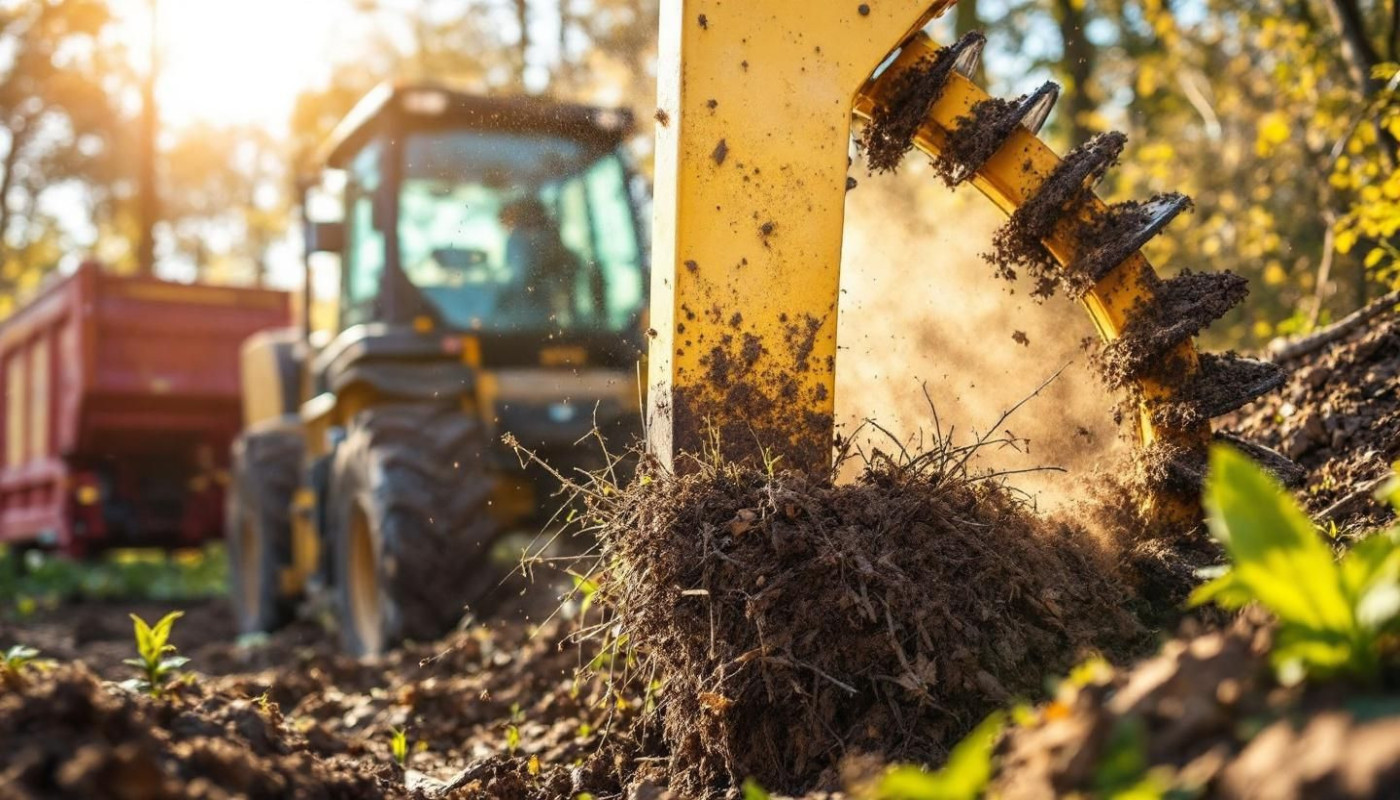
Mulchers and chippers are two specialized machines commonly used in land clearing, each designed to process vegetation and woody debris in distinct ways. A forestry mulcher utilizes a rotating drum equipped with steel teeth, known technically as a rotor mechanism, to shred brush, saplings, and small trees into fine mulch. This equipment is highly valued in vegetation management projects where the goal is to leave nutrient-rich mulch on the ground, promoting soil health and erosion control. On the other hand, a wood chipper is engineered with a different rotor mechanism that uses sharp blades to cut larger branches, limbs, and trunks into uniform wood chips. These chips are often collected for use as biomass fuel, landscaping material, or composting input.
The choice between a forestry mulcher and a wood chipper largely depends on the specific demands of the land clearing task. Mulchers excel in environments requiring rapid brush removal and where retaining organic material on-site is beneficial, such as right-of-way maintenance, wildfire prevention zones, and ecological restoration sites. Wood chippers, by contrast, are ideal for situations where bulkier wood waste needs to be reduced and transported offsite, including post-storm cleanup, construction site preparation, and urban tree management.
Both machines handle different types of debris efficiently. Forestry mulchers are especially suited for thick undergrowth, dense brush, and smaller diameter trees, operating efficiently across rugged, uneven terrain. The design of the rotor mechanism allows these machines to process material directly where it stands, minimizing the need for manual handling. Wood chippers are best for processing felled trees, sizable branches, and clean wood waste, typically requiring the operator to feed cut material into a chute for chipping.
In sum, the selection of a forestry mulcher or wood chipper should align with the land clearing objectives, site conditions, and volume of vegetation to be managed. Certified forestry equipment specialists can advise on the best machine for specific vegetation management scenarios, ensuring optimal results in brush removal and site preparation.
Performance and efficiency factors
When evaluating the productivity and efficiency of mulchers compared to chippers for site clearing, key factors such as debris volume, material size, and density play significant roles. Mulchers typically excel in processing larger areas with mixed vegetation, delivering a high throughput rate that translates to faster equipment performance, especially when handling dense underbrush or smaller trees. Chippers, on the other hand, are designed for woody material and produce a uniform chip size, but their productivity can decline with irregularly sized or excessively large debris. Fuel efficiency is another consideration; mulchers often consume more fuel due to the power required for continuous, high-volume shredding, while chippers may offer better mileage per hour when used with the correct feedstock. Terrain adaptation further distinguishes the two, as mulchers can operate effectively on uneven or sloped ground, making them ideal for challenging landscapes, whereas chippers generally require stable, accessible terrain for optimal operation. Overall, the choice between these machines should be guided by the specific site clearing requirements, considering throughput rate, equipment performance, and fuel efficiency to ensure the best outcome for each unique project.
Safety and environmental impact
When operating mulchers and chippers, strict attention to operator safety is necessary to prevent injuries from high-speed rotating blades, flying debris, and machine malfunctions. Proper training, use of personal protective equipment, and adherence to manufacturer guidelines help reduce risks during land clearing tasks. Noise levels produced by these machines can be significant, particularly in populated or sensitive wildlife areas, making noise reduction strategies such as sound barriers or limiting operation hours advantageous for both operators and nearby communities. Dust suppression measures, including water sprays and containment systems, play a vital role in limiting particulate emissions, which otherwise pose respiratory hazards and contribute to environmental degradation.
The environmental impact of mulchers and chippers hinges on their ability to manage organic waste sustainably. By converting branches and brush into mulch or wood chips, these machines support sustainable land clearing by promoting soil health and reducing landfill contributions. Nonetheless, careful selection of equipment and adherence to local regulations can further minimize any negative effects. For those seeking guidance on selecting the best equipment and learning about advanced operator safety techniques or sustainable land clearing practices, find out more through dedicated resources like https://mulcher-chipper.com/.
Cost and maintenance differences
When comparing mulchers and chippers for land clearing, equipment cost forms a significant part of the decision-making process. Mulchers typically demand a higher machinery investment upfront due to their robust designs and capabilities suited for larger areas and tougher vegetation. Chippers, on the other hand, are often more affordable initially, especially models designed for lighter workloads. Operational expenses for both machines include fuel, lubricants, and replacement parts, but mulchers may incur higher daily costs owing to their greater power requirements and complex components. A crucial factor to examine is the depreciation curve; mulchers often retain value longer if well maintained, while chippers may depreciate faster, particularly if exposed to heavy or improper use. Following a strict maintenance schedule is vital for both, encompassing routine servicing such as blade sharpening, hydraulic checks, and engine inspections, which directly influence longevity and performance.
Routine maintenance significantly impacts the overall expense and reliability of mulchers and chippers. Mulchers often involve more comprehensive service routines, such as checking and replacing track systems, maintaining heavy-duty cutting drums, and frequent inspections of hydraulic systems. Chippers, while simpler in design, require regular attention to knives, belts, and feed mechanisms to prevent costly breakdowns. The availability and cost of repair services can also differ; specialized mulchers may need service from certified technicians, adding to operational expenses, whereas chippers can sometimes be serviced at general repair shops. Machinery investment must account for these ongoing costs, not just the purchase price, to accurately estimate total cost of ownership over the equipment’s lifespan.
Lifespan also plays a defining role in the cost-benefit analysis between these two types of equipment. A well-maintained mulcher, especially those with durable construction, can remain operational for thousands of hours, offering a favorable depreciation curve compared to lower-grade or poorly maintained models. Chippers, especially commercial-grade units, can offer similar longevity but may require more frequent replacement of wear parts like blades and bearings, influencing both service intervals and repair services frequency. Operators must carefully track usage hours against their maintenance schedule to anticipate replacement cycles and avoid unexpected downtime or expensive emergency repairs.
For buyers and operators, understanding the interplay of equipment cost, operational expenses, and continuous maintenance is fundamental for optimizing the machinery investment. Evaluating the typical depreciation curve for each machine, alongside the costs of routine servicing and potential repair services, enables more accurate budget forecasting. Strategic adherence to a maintenance schedule helps prolong equipment service life, supports smoother operations, and minimizes the risk of value loss over time. This comprehensive approach ensures selection of the right land clearing equipment not just for immediate needs, but for sustainable, cost-effective operation throughout its service period.
Selecting the right tool for your needs
Making the best equipment selection for land clearing hinges on a thorough site suitability assessment that takes into account several project requirements. The scale of the undertaking plays a significant role: larger tracts with dense forests may benefit from robust chippers designed to handle substantial volumes of woody material, while mulchers are often favored for projects involving mixed vegetation or undergrowth where the goal is to return organic matter directly to the soil. Evaluating the vegetation type is also key, as hardwoods, softwoods, and brush each present different challenges for machines in terms of both efficiency and maintenance needs. Understanding land management goals is vital; for those aiming to prepare land for agriculture, promote habitat restoration, or simply reduce wildfire risks, each objective may necessitate a different approach to equipment selection. Conducting a careful site assessment to consider potential obstacles—such as terrain, access, and environmental sensitivity—can help mitigate common selection challenges and ensure that the chosen equipment best aligns with both immediate project demands and long-term stewardship objectives.
Similar


